
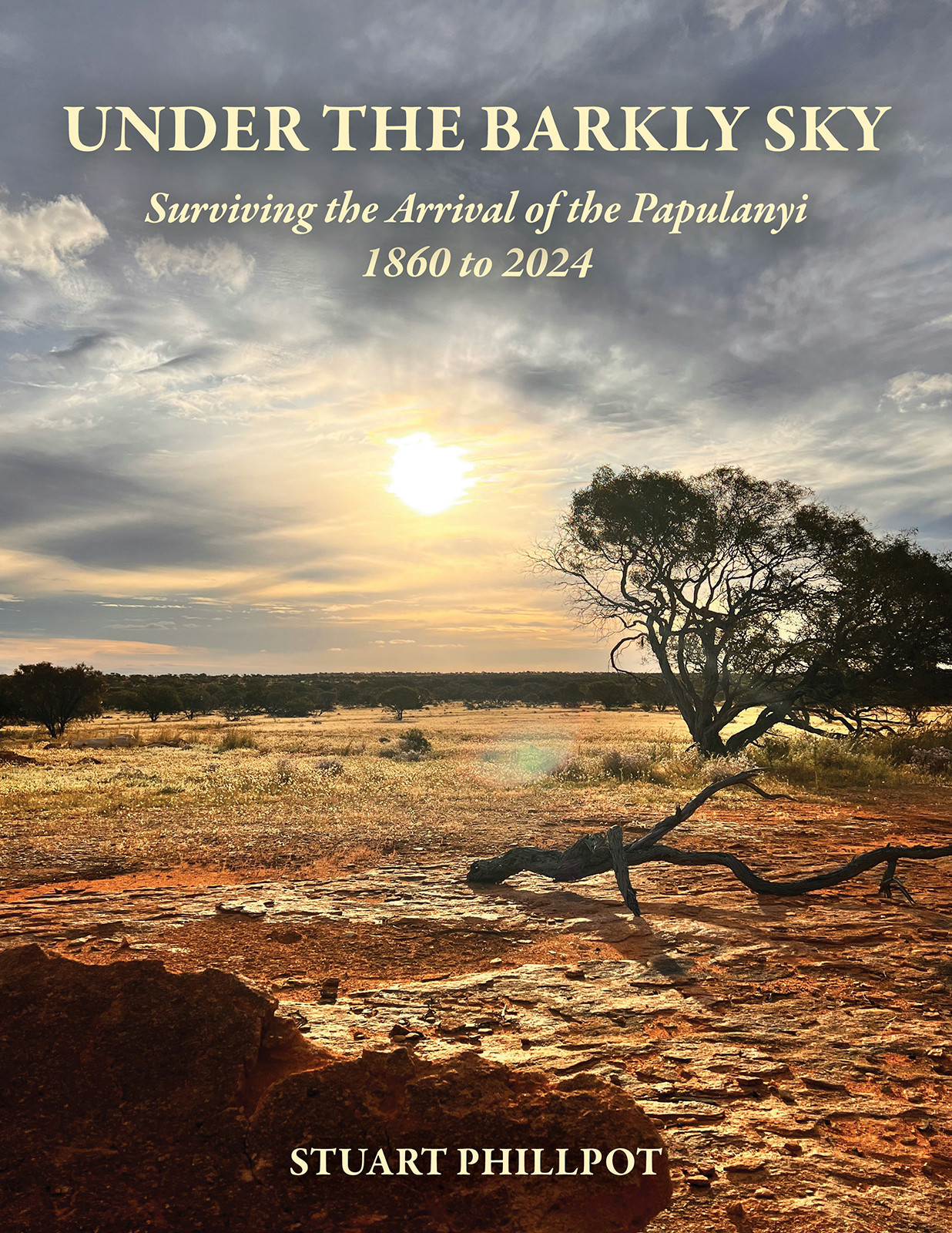
Under the Barkly Sky
In Under the Barkly Sky, Stuart Phillpot provides a comprehensive history of the Barkly Region’s Traditional Owners. This well-researched book chronicles the resilience of the Wumparrani peoples over 150 years in the face of colonisation, cultural erosion, and changing government policies. Phillpot combines historical records, Indigenous voices, and analysis to tell a story of resilience, adaptation, and their ongoing struggle for justice.
From the violent ‘Killing Times’ to land rights victories and the hope for an Indigenous ‘Voice’ to Parliament, Under the Barkly Sky reflects Australia’s colonial legacy and invites us to envision a fairer future.
This book is for those seeking to understand the challenges and resilience of the Barkly’s Aboriginal communities, and offers valuable insights for policymakers, researchers, and everyone who is interested in these aspects of Australia’s history.
“Under the Barkly Sky explores the interactions between non-Aboriginal with and the Barkly Traditional Owners, the continuing violence and deaths, land rights successes, and never-ending changes to complex government policies affecting Aboriginal communities over the last 150 years.”
Pat Dodson - Former Minister of Indigenous Affairs (2022-2024)
“Stuart Phillpot powerfully highlights the negative experiences of Australian Indigenous people resulting from Australia’s ongoing contradictory interpretations of internationally accepted human rights. The stories and reflections in Under the Barkly Sky tackle many profound philosophical issues. Reading this book will be rewarding for those seeking the truth.”
Lieutenant General John Sanderson AC - Governor of Western Australia (2000-2005)
My writing of this book has been supported by a team of advisors across many areas of knowledge.
These include Indigenous peoples and their lands, cultures, and histories. politics, society, wealth and poverty, and the resulting inter-woven history of constant change.
Additionally, I wish to thank my friend David Carroll for his invaluable, multifaceted skills and support in framing and guiding the book’s progress towards publication as a valuable chronicle.
Stuart Phillpot 2026
 Discover